AXIS
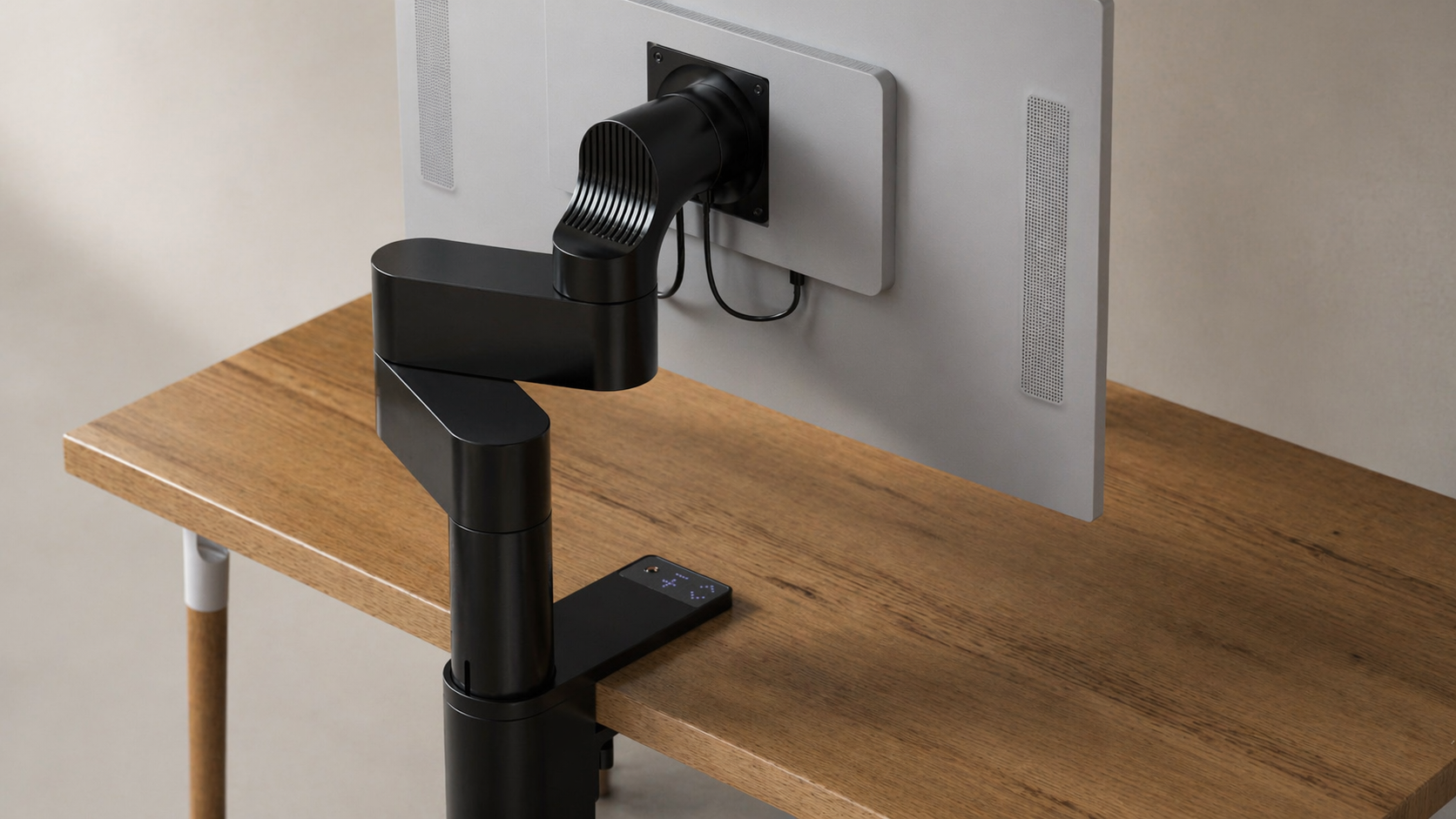
AXIS was a concept developed within Samsung’s Think Tank Team, exploring new user experiences enabled by a robotic monitor arm and integrated software. The system featured a 4-axis arm capable of positioning monitors up to 32” across a wide working envelope, enabling dynamic adjustments in multi-user environments. Using a built-in camera, the system could adapt the monitor position to match each user’s posture and stature, improving ergonomics without manual intervention.
The platform also introduced customizable “workspaces,” allowing users to define specific monitor positions and orientations tailored to different tasks.
I led the mechanical and industrial design of the system, guiding the development from early concept through functional prototyping.


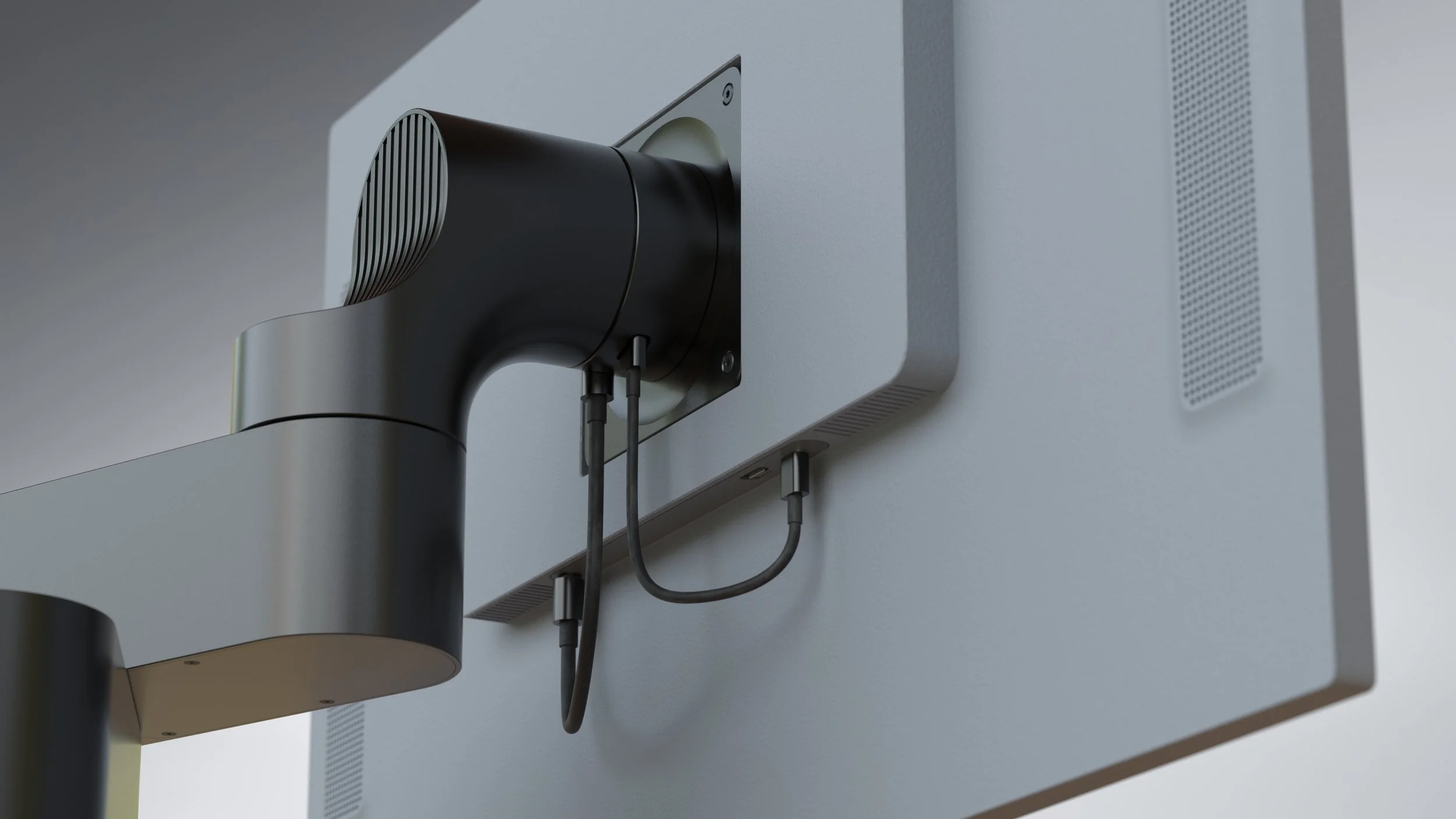

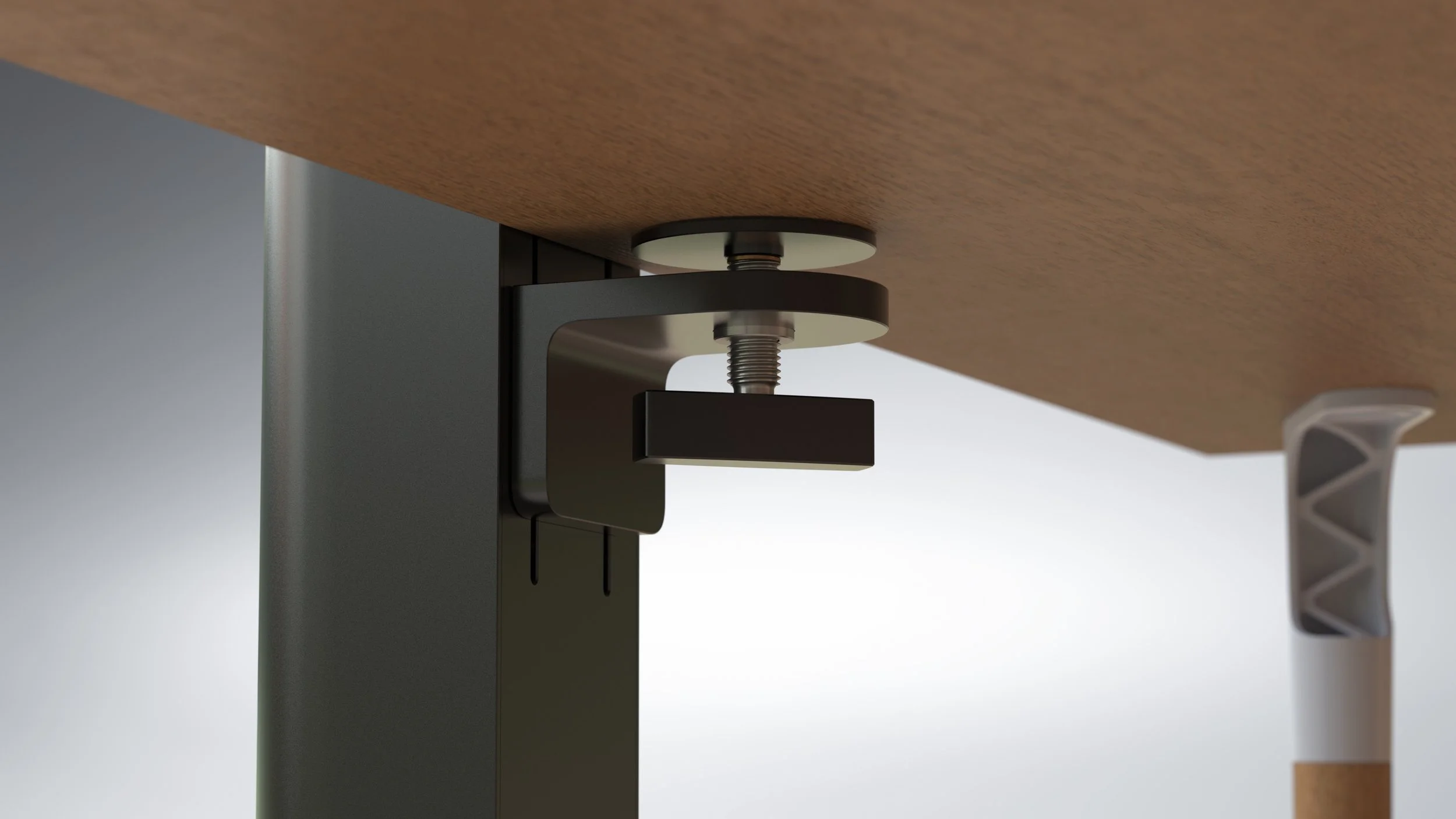


The renderings above and below represent my design intent for the AXIS robotic monitor arm. This iteration significantly improved upon the initial prototype, introducing a more refined aesthetic and robust mechanical architecture. The linkage system was re-engineered to eliminate sag while standardizing a shared actuator design across all joints, improving both performance and design coherence. The desktop base integrates a capacitive sparse display for user input alongside a single ultra-wide-angle camera for user tracking and object detection. The repositionable desk clamp was designed to support a wide range of workstation setups, while the tower base housing accommodates integrated power supplies for both the arm and monitor system.


Prototyping
Throughout the project, I designed and built multiple proof-of-concept prototypes to validate and iterate on key design directions. Pictured below are several concept prototypes, including the second-generation linkage architecture. This design was driven by the need to address insufficient rigidity in earlier versions and to achieve improved kinematic control and overall system stability.


First Prototype
This prototype preceded the design shown above and represents the first attempt at a consumer-oriented system. Early research and experience prototyping on a prior robotic platform informed the decision to pursue a 4-axis architecture as the optimal balance between mechanical feasibility and user experience. A telescoping tower paired with a linkage-based arm and end effector enabled a wide range of motion intended to accommodate diverse users across workstation environments.
A base-mounted camera system tracked users and communicated with the control software, enabling automated positional adjustments. The arm also integrated HDMI and power passthrough to maintain a clean, single-cable connection to the monitor.


Experience Prototype
The first robot developed for the AXIS project was designed and built over a six-week period to support an initial experience prototype for executive demonstrations. It was later used as a platform for continued software and UI/UX development.
Given the accelerated timeline, the prototype was designed with a focus on functional validation over refinement. It exceeded the required range of motion identified through research and was engineered with a 3× safety margin on payload capacity.


